Edible Histories chcocolate exhibition comes to Tyntesfield
Tyntesfield, located just outside of Bristol, will host an exciting exhibition from 11th September to 8th October, as part of Luke Jerram’s Edible Histories project.
Tyntesfield, cared for by the National Trust, is a Victorian Gothic Revival masterpiece, which was home to four generations of the Gibbs family for 150 years. Today, Tyntesfield is home to one of the largest collections of objects looked after by the Trust, many of which reflect Bristol’s rich history.
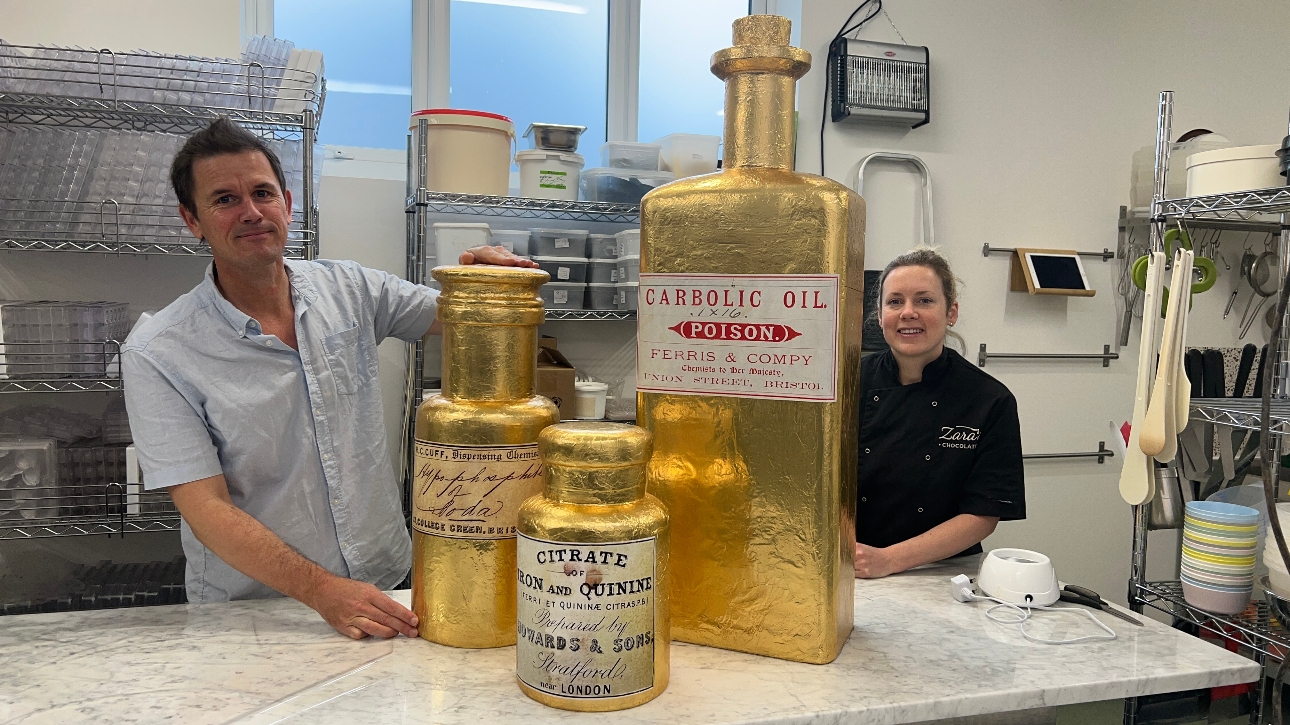
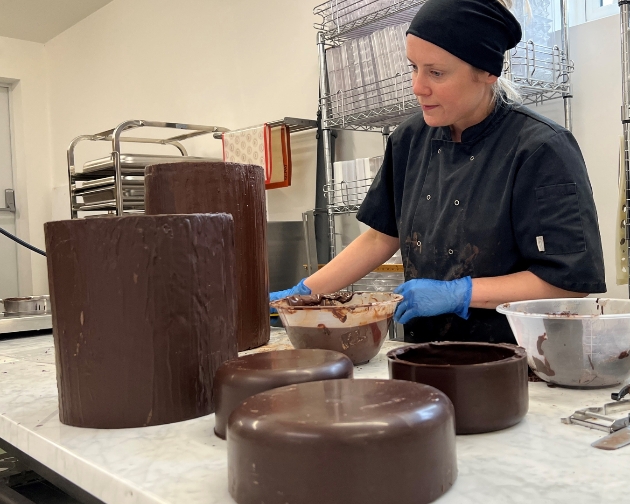
The project, which is funded by the West of England Mayoral Combined Authority, forms part of the Bristol 650 celebrations, which marks 650 years of Bristol being recognised as a county. Throughout the year, five objects that tell the story of Bristol have been selected from Aerospace Bristol, Bristol Zoo Project, Tyntesfield, Glenside Hospital Museum and M-shed. 1m-2m sized replicas of the objects have been created in Fairtrade chocolate by the award-winning Bristol chocolatier, Zara’s Chocolates, wrapped in gold foil and displayed with the original pieces within these much-loved attractions.
The team at Tyntesfield worked closely with Luke to choose the objects to be created from chocolate and agreed on a selection of bottles from the Victorian medicine cabinet in the Charlton Bathroom of Tyntesfield house. The exhibition can be found in the kitchen; a room that is not usually open to house visitors.
Artist Luke Jerram says, "Many of the medicines found in the cabinet were developed, made and sold in Bristol, whilst the bottle of Quinine would have presumably been used on the family’s international travels to help protect them from Malaria. So for me, these bottles help tell the story of the family who lived in Tyntesfield whilst also celebrating Bristol's history in the development of medicine and scientific research."
In addition to the citrate of iron and quinine bottle, two other bottles were chosen: carbolic oil, used as an antiseptic, and hypophosphate of soda, used to manage the symptoms of tuberculosis.
Dr Miranda Garrett, property curator for Tyntesfield, says, "Edible Histories is a wonderful opportunity for us to tell Tyntesfield's story in a new and unexpected way. The Victorian period was a time of extraordinary change, with key scientific discoveries and the reform of social care throughout the 19th century greatly improving life expectancy. But even wealthy families like the Gibbs remained profoundly affected by disease, and four of William and Blanche Gibbs's seven children died young."
On 21 October, the five chocolate objects will be brought together for the first time as part of a free public event at St. Georges, Bristol. Chosen through an online ballot, 10 members of the public will ceremoniously break the objects, using specially selected hammers and chisels. These special few will be the first to taste the chocolate and distribute some to the public who’ve come to witness the event. Luke and his team are also working with The Trussell Trust to distribute some of the chocolate to foodbanks across the city.
Details about how to attend and participate in the event will be announced soon.
In addition to the exhibition, Tyntesfield will host a talk with artist Luke Jerram on 19th September (booking required). To find out more about the Edible Histories Project at Tyntesfield visit www.nationaltrust.org.uk/tyntesfield
As the events sector continues to evolve, 2026 is set to mark a clear turning point for UK venues. Leading event booking platform Tagvenue has released its predictions for how the UK events and hospitality sector will evolve in 2026, pointing to a decisive shift away from scale, standardisation and fixed packages, and towards experience-led formats, wellbeing and clearer communication of value. Drawing on booking behaviour across thousands of UK venues, alongside insights from independent hospitality operators, Tagvenue predicts that the most successful event spaces in 2026 will be those that combine strong identity with flexibility, visual appeal and transparency around pricing and experience.
READ ARTICLE
Experts Warn Against Using AI for Wedding Vows
With peak wedding season approaching, experts are warning couples not to rely on AI to write one of the most personal parts of their big day – their vows. A survey by jewellers Queensmith has revealed that more than half (55%) of UK brides and grooms are now using AI tools to help write their wedding vows and speeches, raising questions about authenticity, originality and even potential legal grey areas. The findings come amid a growing debate around AI-written vows after a registrar in the eastern Netherlands saw a marriage called into question when AI was used to help write the ceremony script. In the case, the District Court of Overijssel ruled that "no marriage has been established" after it emerged the registrar had relied on ChatGPT to draft parts of the ceremony. The case has sparked wider concerns that AI-generated wording could unintentionally mirror existing vows or scripts found online, raising questions about originality and authenticity.
READ ARTICLE
Marriage, Money, and Modern Love: Gen Z and Millennials
"As a family barrister, I spend much of my professional life dealing with what happens when relationships break down," says Rosanne Godfrey-Lockwood, Family Barrister at 4PB. "That vantage point inevitably shapes how I think about marriage — not cynically, but realistically. It is perhaps unsurprising, then, that one of the most notable trends I have observed in recent years is the growing interest in prenuptial agreements among Gen Z and younger Millennial couples.
READ ARTICLE
Win an Engaged Couple a Dublin Minimoon with GoHen & StagWeb
Leading UK stag and hen party providers, StagWeb and GoHen, have launched a brand-new competition offering one lucky engaged couple the chance to win a Dublin minimoon - completely free. Whether it's a little pre-wedding trip to escape the planning stress or a post-wedding adventure before the honeymoon, it could be the perfect little wedding gift for the happy couple - read here now!